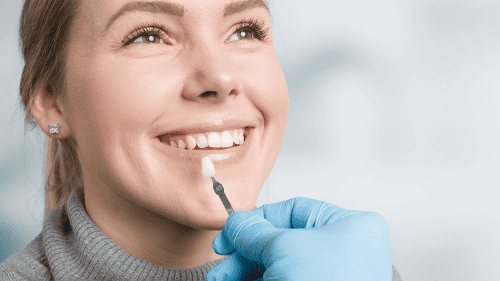
Veneers are renowned for transforming smiles and boosting confidence through cosmetic enhancement. While our patients appreciate the change, some notice subtle differences in how they articulate sounds after veneer treatment. Veneers are typically chosen to address and correct aesthetic issues. Yet, they can also influence your tongue’s interaction with the new oral surfaces.
Veneers alter the profile and shape of your teeth, changing your mouth’s structure. Changes in thickness or angle can alter the special relationship between the tongue and teeth, affecting sound production. While this may sound discouraging to patients who want veneers, the good news is that this does not continue indefinitely.
The Initial Adjustment Period After Veneer Application
The period following your veneer procedure may involve a slight lisp and usually lasts from a few days to a few weeks. You may find it slightly harder to pronounce “s,” “t,” or “d” sounds at first, but this usually improves within the first week. Patients can expedite speech adjustment from veneers by practicing speaking out loud. Repeating certain words helps the tongue and jaw relearn their positioning against the new surfaces.
If you still experience effort with some sounds after a few weeks, we can make minor refinements to help your veneers feel more natural.
FAQs on Veneers and Speech Changes
Can veneers permanently change my speech?
No, speech changes are only temporary. Once your mouth adapts and we ensure a proper fit of your veneers, your normal speech patterns return.
Can improperly fitted veneers cause speech issues?
Yes, if veneers are too thick, too long, or placed unevenly, they can interfere with tongue movement. We make sure your veneers look natural and function properly.
What affects speech more, upper or lower veneers?
Upper veneers tend to have a greater impact because the tongue and upper teeth are more involved in forming sounds. However, both the top and the bottom can initially influence sounds.
Can temporary veneers affect speech?
Yes, temporary veneers can affect how you speak as they are usually different from your natural teeth. Your speech will improve once we place your permanent veneers.
What should I avoid during my adjustment period?
Avoid whispering or speaking too softly when practicing pronunciation. Deliberate speech can help your tongue adapt quickly.
Will people notice that I sound different?
Usually not. Most changes are subtle and more noticeable to you than to other people. Regular social interactions will advance your natural tone and clarity.
Can Dr. Zadeh assist if my speech doesn’t improve?
Absolutely. We can assess the fit and make small adjustments to your veneers. Even minor reshaping can restore comfort and speech flow.
Does everyone experience speech changes after veneers?
Not all patients do. Some people adjust immediately with no effects, while others may take a while to adapt. It all depends on your bite, the placement of your veneers, and your tongue position.
Are changes in speech more common with full-mouth veneers?
Patients who receive veneers on multiple teeth (usually the front 6–8) are more likely to notice temporary changes due to numerous tongue contact points.
Could veneers improve my speech if I had misaligned teeth to begin with?
Yes. Veneers can improve speech clarity for some patients by creating smoother, more even tooth surfaces that facilitate proper articulation.
Are porcelain veneers better for speech than composite veneers?
Both types are ideal when designed correctly. Porcelain veneers are usually more custom-shaped, which can help minimize speech difficulties.
What can I expect in my follow-up appointment regarding speech?
We’ll check your bite, comfort, and enunciation. Be sure to mention any lingering speech changes so we can make adjustments to provide a more natural feel.
Can Veneers Cause a Lisp?
It’s common to experience temporary lisps after veneers because of the alteration made to the tooth’s surface. Veneers extend beyond your natural tooth edges, forcing the tongue into a different position. This effect changes airflow while talking, and is most evident when pronouncing sounds like S and Z.
While most individuals experience only brief changes during adjustment, some may have a lisp for a few days. These lisps occur due to contour changes in your teeth. Even a millimeter can cause the tongue to exceed its usual range of motion or get stuck on a new edge.
The Importance of Expertise in Veneer Speech Outcomes
Knowledge and experience are essential for achieving the best speech results when placing veneers. We understand the attention required during the preparation and design phase, ensuring close replication of your original tooth. This precision ensures consistent coordination between your tongue and teeth when you speak.
Advanced training and state-of-the-art facilities can simulate and fine-tune the potential impact on speech before concluding your veneers. From design to aftercare, we ensure your veneers not only look natural but also support clear speech. We strive to make your veneer adaptation as seamless as possible. Book your appointment with us today to experience professional and caring support throughout your journey with veneers.