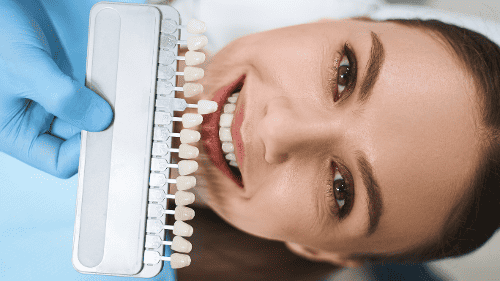
If you’ve been living with gapped teeth or dealing with crooked alignment, you’ve probably looked for orthodontic options like braces or clear aligners. While orthodontic treatment is still the best option for correcting significant alignment issues, it's not always necessary for crooked or gapped teeth. For many patients, porcelain veneers can create the appearance of a straighter, more balanced smile in just a few appointments.
Veneers are an almost instant method for masking minor imperfections, including gaps and crooked teeth. While they’re not a substitute for orthodontics and serious misalignment, veneers can work for crooked teeth by creating the illusion of a uniform smile.
In this blog, we'll explain when veneers can fix crooked or gapped teeth, when orthodontic treatment is still the better choice, and how to determine which option is right for you.
What Are Dental Veneers?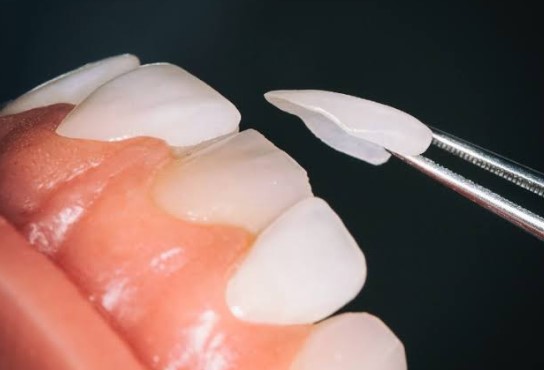
Dental veneers are thin shells made of porcelain or composite resin that are custom-made to fit over your teeth to enhance their appearance. Unlike braces or clear aligners, veneers don't move your teeth into a new position. Instead, they reshape and refine what you see when you smile by improving the size, shape, color, and overall symmetry of your teeth.
We often recommend veneers for patients with small, close gaps, slightly crooked teeth, tooth discoloration, and chipped teeth who want a faster cosmetic solution. Because every veneer is custom-designed to complement your facial features and smile, the results can look completely natural.
Can Veneers Fix Crooked or Gapped Teeth Without Braces?
Yes, veneers can be used to straighten crooked teeth or fill small gaps between teeth without traditional braces. While veneers do not shift your teeth into new positions, they can help to enhance the appearance of your smile by reshaping the visible surfaces of your teeth.
 Closing Small Gaps Between Teeth
Veneers can close small gaps by making the teeth on either side slightly wider. After removing a thin layer of enamel, your dentist bonds a custom porcelain veneer to each tooth. The edges of the veneers facing the gap are shaped to extend slightly inward. When the veneers are placed, these edges meet and close the space. The rest of each veneer follows the natural shape of the tooth, keeping your smile balanced and natural.
This approach is commonly used to treat small to medium gaps between the front teeth, known as a diastema. Each veneer is shaped and sized to adjust the appearance of the teeth while maintaining natural proportions and a balanced smile. However, if the space is too big, the veneers can be too wide, which will create an unnatural look. In these conditions, Dr. Zadeh may recommend orthodontic treatment first, or a combination of orthodontics and veneers for natural and long-lasting results.
 Correcting Slightly Crooked or Uneven Teeth
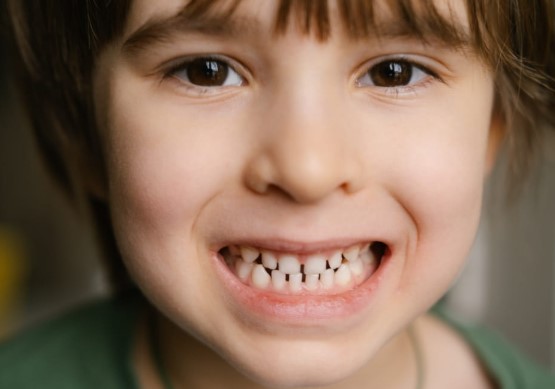
Veneers are used to improve the appearance of teeth that are slightly crooked, rotated, or uneven. Instead of moving the teeth, a veneer changes the shape of the visible front surface. For example, if a tooth sits slightly inward, the veneer can be shaped to make its front edge appear more in line with the teeth beside it. If a tooth is shorter or smaller, the veneer can add length or width to create a more even smile.
This can be a good option for adults who have experienced minor tooth movement after braces or who are mainly concerned about the appearance of slightly crooked teeth. Veneers can create a straighter and more symmetrical look while keeping the natural teeth in their existing positions.
During your consultation, Dr. Zadeh will evaluate your bite, tooth position, and oral health to determine if veneers or orthodontics will be the best long-term solution for your smile.
What Veneers Can and Cannot Fix
The major benefit of veneers is that they can change the look of your smile without shifting your teeth. However, they are intended to address cosmetic concerns, not any underlying bite or alignment issues. Understanding where veneers work best helps you choose a treatment that delivers natural-looking, long-lasting results.
What Veneers Can Correct
If your concerns are mostly cosmetic, veneers can often make a difference in just a few appointments. They are typically used to enhance:
- Small to moderate gaps between teeth
- Teeth that are slightly misaligned or slightly overlapped
- Teeth that are not uniform in size, shape, or length
- Teeth that are chipped, worn, or lightly cracked
- Dark stains that are unresponsive to professional teeth whitening.
When Orthodontic Treatment Is the Better Choice
Some concerns require the teeth to be physically repositioned rather than just reshaped. In these situations, braces or Invisalign usually provide the healthiest and most predictable long-term outcome. Orthodontic treatment is a better choice than veneers in the following cases:
- Moderate to severe crowding or overlapping teeth
- Spaces that are too large and would look too wide or unnatural with veneers
- Overbite, underbite, crossbite, or open bite
- Chewing or speech problems due to jaw alignment problems
- Teeth that need to be moved for functional or long-term oral health reasons
Who Is an Ideal Candidate for Veneers?
Veneers are a great choice but not for every smile. The ideal candidates are those who want to enhance their cosmetic appearance but have healthy teeth and gums. Veneers may be a good option for you if you:
- Have healthy teeth and gums with no active decay or gum disease
- Desire to correct cosmetic issues like small gaps, minor crooked teeth, discoloration, chips, or uneven teeth.
- Want to achieve results sooner than months or years of orthodontic treatment
- Previously had braces but have experienced slight shifting over time
- Looking to improve your smile before a wedding, graduation, career achievement or other significant life event
 What to Expect During the Veneers Process
Getting veneers is a straightforward process that takes around two to three visits. Knowing what to expect during your veneers process can help you feel more confident and comfortable before the treatment. Here’s what you can expect;
Initial Consultation
Your veneer treatment process begins with an initial consultation with Dr. Zadeh. She will examine your teeth, bite, and gums, understand your cosmetic goals, and determine whether veneers or another treatment would be suitable for you. If veneers are a suitable option, she’ll explain the process, discuss the number of veneers needed, and what material will work best for your needs.
Preparation
After the consultation, we’ll prepare your teeth by removing a thin layer of enamel to create room for the veneers. Then, we’ll take detailed digital impressions or molds so your custom veneers can match your ideal shape, size, and shade. For a few days, you’ll wear temporary veneers while your permanent restorations are being created.
Placement
When your custom veneers are ready, Dr. Zadeh will check their fit, color, and overall appearance before bonding them permanently to your teeth. We'll make any final adjustments to ensure they feel comfortable, function properly, and blend naturally with your smile.
 Transform Your Smile With Custom Veneers in Tarzana
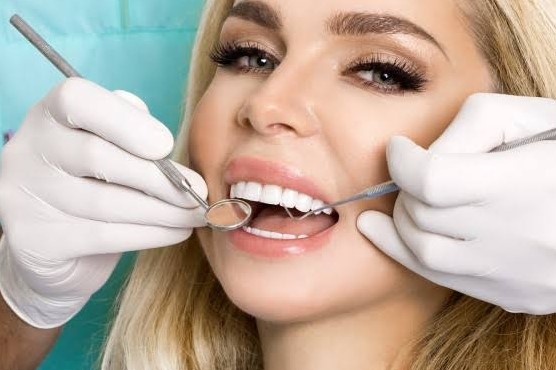
If you’re considering to transform your smile but don’t want to commit months of wearing traditional braces, veneers can offer an effective solution for closing small gaps and improving the appearance of crooked or uneven teeth. With proper planning and customization, they can provide a balanced, natural-looking smile in 2-3 appointments.
At our Tarzana Dental office, we carefully evaluate your teeth, and understand your goals before recommending any treatment. Trusted by patients across Tarzana, Encino, Woodland Hills, and the surrounding communities, we've earned more than 291 five-star Google reviews by delivering personalized care and natural-looking results. Schedule your consultation today and discover whether custom veneers are the right choice for your smile.
FAQs
Are veneers suitable for all crooked teeth?
Veneers work best for minor misalignments. But severe crowding or bite issues may still require orthodontic treatment for functional reasons.
How long do veneers last?
High-quality veneers typically last 10–15 years with proper care, and regular checkups to maintain their appearance and function.
Can I whiten my teeth after getting veneers?
Veneers do not respond to whitening treatments. It’s best to match them to your desired shade before placement.