Losing a tooth can be a shock, but replacing it does not have to be stressful. Two of the most common solutions are dental implants and bridges, yet each functions differently. In this article, we’ll discuss why more people are choosing dental implants over bridges.
We’ll outline practical benefits, everyday comfort, and long-term results, helping you make a confident, informed decision while keeping your smile healthy and strong. Before we explore the benefits of dental implants in Tarzana, we’ll outline the two primary methods.
Dental Implants vs Bridges – What Are They?
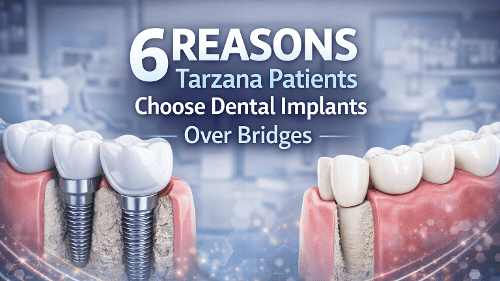
Dental implants are among the most popular tooth-replacement options in our Tarzana practice. This method involves fusing a titanium post to your jawbone, acting as the artificial root for the new tooth. Once this has healed, we attach a crown, also known as the abutment, that acts as the prosthetic tooth.
A dental bridge is a traditional option that can restore one or more missing teeth. A bridge consists of prosthetic teeth with crowns on either side. The existing teeth on either side of the gap provide support to the bridge.
1. Long-Term Durability
A well-cared-for implant can last up to 50 years. With proper brushing, flossing, and dental check-ups, many patients can keep their implants for life. In contrast, the average lifespan of a bridge is around ten years. The discrepancy in the longevity of the two options gives implants a distinct advantage.
2. Natural Look and Feel: Permanent Tooth Replacement in Tarzana
One of the leading concerns among our patients is the impact of tooth loss on their self-esteem. While replacement will ease this discomfort, some methods look more natural than their counterparts. Dental implants continue to grow in popularity thanks to their natural, lifelike appearance. Our dental implants closely mimic your existing teeth, allowing them to blend seamlessly with the rest of your teeth.
3. No Impact on Surrounding Teeth
Implants function as independent structures that require no support from the surrounding teeth. As a result, the neighboring teeth don’t need to be filed down or fitted with crowns. The standalone titanium root doesn’t cause wear and tear or sensitivity to the surrounding teeth, unlike traditional tooth replacement methods.
Often, when a patient loses a tooth, the adjacent teeth tend to move into the space. An implant acts as a filler, preventing shifting and maintaining proper tooth alignment.
4. Improved Jawbone Health
Teeth roots are primarily responsible for stimulating bone growth in your jaw. Losing a tooth reduces bone activation, leading to bone loss. Extended periods with a missing tooth may even change your facial structure. These changes can include sunken cheekbones and even sagging skin.
Implants can avoid bone decline and the complications associated with it. By fusion with the jawbone, the implant, like a natural tooth root, stimulates growth. Since dental bridges don’t breach the gum line, they do not maintain bone density.
5. Enhanced Chewing Comfort
Dental implants make eating feel natural again, not cautious or restricted. They anchor directly into the jaw, providing each bite with strength and stability. Many of our patients notice better balance when chewing and less pressure on nearby teeth.
Bridges can shift slightly, which often creates discomfort during meals. Implants stay firm so that you can enjoy crunchy, chewy, and textured foods with confidence. As experienced implant dentists in Tarzana, we help our patients restore comfort, control, and peace of mind at every meal.
6. Lower Long-Term Maintenance
Dental implants simplify long-term care and fit easily into daily routines. You brush and floss them just like natural teeth. Although bridges often require specialized tools and additional cleaning steps. Over time, that added care can feel frustrating and time-consuming. Implants also avoid stress on nearby teeth, which helps reduce future dental work. For many patients, replacing missing teeth at your local Tarzana dental studio offers durability, simplicity, and fewer ongoing concerns over time.
Who Makes A Good Candidate for Implant Dentistry in Tarzana?
People of all ages can benefit from dental implants at our Tarzana practice, as long as they have good overall oral health. Healthy gums and sufficient jawbone support create a strong foundation for long-lasting results. Patients should commit to regular dental care and maintain good oral hygiene habits.
Some health conditions, like uncontrolled diabetes or heavy smoking, may require additional evaluation before treatment. During your initial consultation, we’ll assess your individual needs, discuss options, and create a personalized plan. With proper care, our clients enjoy improved comfort, function, and confidence from implants for many years.
We’re Known for The Best Tooth Replacement in Tarzana, CA
Our patients choose us for dental bridge alternatives because experience matters. Our skilled dentists combine advanced technology with personalized care, ensuring each treatment is tailored to individual needs. Being part of the community allows us to build trust and maintain lasting relationships.
We ensure you feel comfortable asking questions and exploring options in a familiar, welcoming environment. We aim to monitor progress, adjust care accordingly, and provide ongoing support. We provide confidence and peace of mind throughout your smile restoration journey. Contact us today to book your consultation.