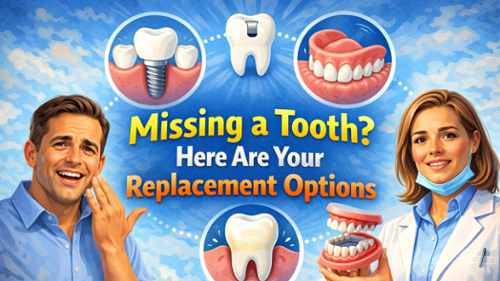
Losing a tooth, whether from decay, injury, or extraction, is more common than you might think. What matters most is what you do next. Leaving a gap untreated can lead to shifting teeth, bone loss, and changes to your bite and overall appearance over time.
The good news is that modern dentistry offers a range of solutions to suit almost every budget and lifestyle. Below is a clear, honest breakdown of every tooth replacement option available today.
Why Acting Quickly Matters
After losing a tooth, the jawbone beneath it begins to shrink without the stimulation of a tooth root. This bone loss can start within months and may eventually rule out certain options like dental implants. Acting promptly keeps all your options open and prevents future complications that can cost significantly more to fix.
Option 1: Dental Implant
Best for: Most patients seeking a permanent, natural-feeling solution
Estimated cost: $3,000 to $6,000 or more per tooth
A dental implant is widely considered the gold standard for tooth replacement. A titanium post is surgically inserted into your jawbone, acting as an artificial tooth root. Once healed, a custom-made crown is attached on top, creating a result that looks, feels, and functions just like a natural tooth.
The healing process, known as osseointegration, takes several months as the implant fuses with your bone. This is what gives it exceptional stability and longevity. With proper care, implants can last a lifetime.
Key advantages
-
Looks and feels like a natural tooth
-
Preserves the jawbone and prevents bone loss
-
No impact on neighboring teeth
-
Can last a lifetime with proper care
Things to consider
-
Highest upfront cost of all options
-
Requires oral surgery and healing time of several months
-
Not suitable for all patients, particularly those with significant bone loss without a graft
Option 2: Dental Bridge
Best for: Patients who want a fixed solution without surgery
Estimated cost: $1,500 to $6,000 depending on type
A traditional dental bridge fills the gap by anchoring an artificial tooth, called a pontic, to the two natural teeth on either side of the space. These supporting teeth, called abutments, are crowned to hold the bridge in place. The result is a fixed, non-removable restoration that restores both function and aesthetics.
Bridges are a well-established solution and can be completed in just a few dental visits. However, they require permanently modifying healthy neighboring teeth, which is an important trade-off to discuss with your dentist.
Key advantages
-
No surgery required
-
Completed within a few weeks
-
Natural-looking result
-
More affordable than a full implant
Things to consider
-
Healthy neighboring teeth must be permanently shaved down
-
Bone loss beneath the gap will continue over time
-
Harder to clean underneath than natural teeth
-
May need replacement after 10 to 15 years
Option 3: Removable Partial Denture
Best for: Budget-conscious patients or those replacing multiple teeth
Estimated cost: $700 to $1,800
A removable partial denture is a prosthetic device that clips onto your remaining teeth with metal clasps. It replaces one or more missing teeth and can be taken out for cleaning. This is typically the most affordable and fastest option available, and modern partial dentures are significantly more comfortable and natural-looking than older versions.
While not as stable or natural-feeling as fixed options, a partial denture is a practical solution, particularly when multiple teeth are missing or when surgery is not medically or financially feasible.
Key advantages
-
Most affordable tooth replacement option
-
No surgery or invasive procedures
-
Can replace multiple missing teeth at once
-
Easily adjusted or repaired if needed
Things to consider
-
Less stable than fixed options, especially when chewing
-
Must be removed and cleaned nightly
-
Can feel less natural than implants or bridges
-
Does not prevent bone loss in the jaw over time
Option 4: Implant-Supported Denture or Mini Implant
Best for: Patients with some bone loss who want more stability than a traditional denture
Estimated cost: $1,500 to $4,500
For patients who want more stability than a traditional denture but face cost or medical barriers to a full implant, implant-supported options offer a compelling middle ground. Mini implants are smaller versions of traditional implants placed with less invasive surgery. They can anchor a denture for improved comfort and bite function.
This option is especially popular for patients with some bone loss who may not qualify for a standard implant without a bone graft procedure first.
Key advantages
-
More stable and comfortable than a loose denture
-
Less invasive surgery than a full implant
-
A good option for patients with bone loss
-
More affordable than standard implants
Things to consider
-
Still requires minor oral surgery
-
Not as durable long-term as a full implant
-
Less commonly offered than other options
-
Best suited to specific case types
How to Choose the Right Option for You
There is no single best answer for everyone. The right choice depends on your overall oral health, bone density, budget, timeline, and personal preferences. A thorough consultation with your dentist or a dental specialist such as an oral surgeon or prosthodontist will help map out which options you qualify for.
If cost is a concern, ask your dentist about financing plans or whether dental schools in your area offer reduced-cost treatments. Many insurance plans cover a portion of bridges and dentures, and implant coverage is becoming more common.
Whatever you choose, replacing a missing tooth is one of the best investments you can make in your long-term oral health, confidence, and quality of life.
Ready to Explore Your Options?
The first step is a conversation with your dental team. Book a consultation today to get a personalized assessment of your oral health and a clear recommendation tailored to your situation. The sooner you act, the more options you will have.