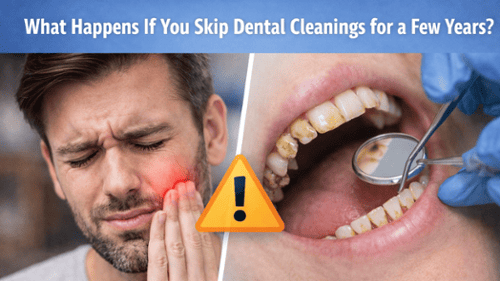
It is easy to put off routine dental visits. Life gets busy, and if your teeth are not hurting, it can feel like skipping a cleaning here and there is harmless. But when dental cleanings are delayed for years instead of months, the effects can quietly build into serious oral health problems.
Understanding what actually happens when you skip professional cleanings can help you make better decisions about your long-term health, your comfort, and even your finances.
Why Dental Cleanings Matter More Than You Think
Routine dental cleanings are about much more than keeping your smile bright. Even with excellent brushing and flossing habits, plaque and tartar still accumulate in places that are difficult to reach at home.
Plaque is a sticky film of bacteria that forms on your teeth every day. If it is not removed, it hardens into tartar, which cannot be cleaned off with a toothbrush. Once tartar builds up, it becomes a breeding ground for harmful bacteria that attack your gums and teeth. Professional cleanings remove both plaque and tartar, helping to prevent small issues from turning into larger problems.
The First Stage: Plaque Buildup and Early Gum Irritation
If you skip dental cleanings for several months or even a year, the first thing that typically develops is a noticeable buildup of plaque and tartar.
At this stage, you may experience:
• Bad breath that does not go away with brushing
• Gums that look slightly red or swollen
• Minor bleeding when brushing or flossing
This early stage of gum disease is called gingivitis. The good news is that gingivitis is reversible with proper care and a professional cleaning. However, if left untreated, it can progress into something more serious.
The Second Stage: Gum Disease Begins to Progress
After a year or more without cleanings, gingivitis can advance into periodontitis, a more severe form of gum disease.
At this point, bacteria begin to spread below the gumline, causing the gums to pull away from the teeth. This creates pockets where bacteria can grow unchecked.
Common symptoms at this stage include:
• Persistent bad breath
• Increased gum bleeding
• Gum recession, making teeth appear longer
• Sensitivity to hot or cold foods
Unlike gingivitis, periodontitis is not fully reversible. It requires more intensive treatment and ongoing management to prevent further damage.
Tooth Decay Becomes More Likely
Skipping cleanings also increases your risk of cavities. Plaque produces acids that slowly wear down the enamel, which is the protective outer layer of your teeth.
Without regular cleanings and checkups, small cavities can go unnoticed and untreated. Over time, these cavities can grow deeper and reach the inner layers of the tooth.
This can lead to:
• Tooth pain or sensitivity
• The need for fillings or crowns
• In severe cases, root canal treatment
What could have been a simple and inexpensive fix can turn into a more complex and costly procedure.
Long Term Effects: Tooth Loss and Bone Damage
If dental cleanings are skipped for several years, the damage can become significant. Advanced gum disease can begin to destroy the bone that supports your teeth.
As the bone deteriorates, teeth may become loose and eventually fall out or require extraction.
This stage often includes:
• Loose or shifting teeth
• Pain when chewing
• Changes in your bite
• Visible gaps forming between teeth
Tooth loss does not just affect your appearance. It can impact your ability to eat, speak, and maintain proper oral function.
The Impact on Your Overall Health
Oral health is closely connected to your overall health. When gum disease is left untreated, bacteria from the mouth can enter the bloodstream and contribute to other health conditions.
Research has linked poor oral health to:
• Heart disease
• Diabetes complications
• Respiratory infections
• Pregnancy related complications
Skipping dental cleanings for years does not just affect your teeth and gums. It can have a broader impact on your body as a whole.
What Happens When You Finally Go Back to the Dentist
If it has been a few years since your last cleaning, you might feel nervous about returning to the dentist. The good news is that dental professionals are there to help, not judge.
However, your appointment may look a little different from a routine cleaning.
Depending on your condition, your dentist may recommend:
• A deep cleaning, also known as scaling and root planing
• Multiple visits to fully remove buildup
• X rays to assess bone and tooth health
• A customized treatment plan for gum disease
While this process may take more time and investment than a standard cleaning, it is an important step toward restoring your oral health.
Can You Reverse the Damage?
The answer depends on how long cleanings have been skipped and how much damage has occurred.
• Early stages like gingivitis can usually be reversed with professional cleanings and improved home care
• Moderate gum disease can be managed but not fully reversed
• Advanced damage, such as bone loss or missing teeth, often requires restorative treatments
The sooner you return to regular dental care, the better your chances of minimizing long term effects.
How Often Should You Get Dental Cleanings?
For most people, dental cleanings are recommended every six months. However, some individuals may need more frequent visits, especially if they have a history of gum disease or other oral health concerns. Our dentist can recommend a schedule that is tailored to your specific needs.
The Bottom Line: Prevention Is Always Easier Than Treatment
Skipping dental cleanings for a few years may not seem like a big deal at first, but the consequences can build over time. What starts as minor plaque buildup can progress into gum disease, tooth decay, and even tooth loss.
Regular dental visits are one of the simplest ways to protect your smile and avoid more serious issues down the road. They help catch problems early, keep your teeth clean, and support your overall health.
If it has been a while since your last cleaning, there is no better time to get back on track. Taking that first step can make a significant difference in your oral health for years to come.