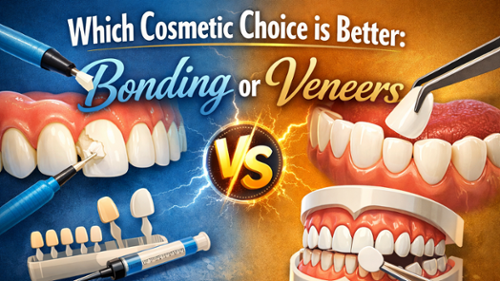
Patients often inquire about ways to improve their smile, especially when a minor flaw begins to show. It's possible that a front tooth chipped years ago and has never looked the same since. Or maybe there's a stain that whitening treatments haven't been able to remove. Cosmetic dentistry can improve the appearance of teeth in several ways, regardless of the cause.
Dental bonding and porcelain veneers are two treatments that come up a lot in these talks. Both can make a smile look better, but they work best in different contexts and yield slightly different results. Knowing how each option works might help you choose the best treatment for your needs.
What is Dental Bonding?
One of the easiest cosmetic dental procedures is dental bonding. Placing a tooth-colored composite resin directly on the tooth surface is part of the process. The dentist forms and smooths the material while it is still soft, until the tooth looks natural again. A curing light hardens the resin and polishes the surface once the shape is perfected.
When done well, bonding mixes in with natural teeth quite well. Many people can't even tell where the bonding starts, and the natural tooth stops.
One reason bonding is so popular is that it can often be done in a single visit. Also, the surgery usually doesn't need any preparation. In many cases, the dentist doesn't need to remove much enamel, so the tooth's natural structure stays mostly the same.
Bonding is often used to make subtle cosmetic changes. It can generally fix a chipped edge on a front tooth, a small gap between teeth, or a small area of discolouration quite rapidly.
What Are Veneers for Teeth?
Veneers are a different approach to cosmetic dentistry. Veneers cover the entire front surface of the tooth rather than just a small portion. These very thin shells, usually made of porcelain, are fashioned to match the color and shape of a person's smile.
The process for getting veneers usually takes a little longer than bonding. The dentist removes a thin layer of enamel from the tooth during the initial appointment to prepare it. This procedure ensures the veneer will look natural after it is glued in place.
Then, impressions of the teeth are made and submitted to a lab for dental work. The lab makes veneers that are the right form and color. The patient returns for a second session once the veneers are ready. The dentist then adheres them to the teeth and ensures everything feels comfortable.
Veneers can fix more than one cosmetic problem at once since they cover the entire front surface of the tooth.
When is Bonding the Best Option?
When the cosmetic problem isn't too big, bonding is usually the best option. For example, if someone chips a tooth while eating something hard, bonding can usually fix it in just one visit.
Dentists sometimes recommend bonding since it is a safe process. Most of the tooth stays the same because only a small amount of enamel needs to be removed. People who don't want a lot of dental work often like this part of the bonding process.
The price can also play a role in the choice. Bonding is usually less expensive than veneers because it can be done in one visit and doesn't need a dental lab.
When Should You Get Veneers?
When someone desires a significant change in their appearance, veneers are often recommended. They cover the front of the tooth completely, allowing dentists to change the shape of the smile in ways bonding can't usually achieve.
For instance, veneers can help with very discolored teeth, teeth that are not the same size, or a little crooked. They can also make the look of multiple teeth more uniform.
Veneers are also strong, which is another benefit. Porcelain doesn't stain easily and usually looks good for a long time. People who drink coffee or tea often find that veneers retain their color better than composite bonding.
Are Veneers More Natural-Looking?
An expert dentist may make both treatments look natural. But porcelain veneers usually look a little more lifelike because they reflect light in a specific way. Porcelain can accurately replicate the appearance of natural enamel when it is translucent. Veneers can make teeth look bright and polished while looking authentic.
Bonding can look great, especially when fixing a small chip or reshaping a tooth. In those situations, most individuals wouldn't even notice the difference.
How Long Do These Treatments Last?
Another thing patients typically consider is how long the effect will last.
Most of the time, dental bonding lasts for several years; however, the composite material might wear down or become stained over time. People can also get little chips if they bite into hard foods or grind their teeth.
Porcelain veneers usually last longer. Many people keep their veneers for 10 to 15 years or longer if they take care of them. Veneers tend to look better over time since porcelain is harder and less likely to discolor.
Which Choice Is Best for Your Smile?
Ultimately, the choice between bonding and veneers comes down to what you want to achieve and how your teeth are right now.
Bonding is a good option for minimal cosmetic changes and for people who seek a rapid, safe fix. Patients who want a more significant change or need to address many cosmetic problems at once often choose veneers instead.
The easiest way to find out which option is best for you is to talk to a cosmetic dentist. During a consultation, the dentist can examine your teeth, discuss your goals, and outline the results you can expect from each procedure.
For many people, getting a better smile is one of the best things they can do for their teeth. People can feel more confident when they smile or talk, even with tiny improvements