Core Insights:
- Braces offer fixed treatment for complex alignment and bite concerns.
- Invisalign provides discreet, removable aligners for suitable cases.
- Both treatments require personalized planning, regular monitoring, and retention.
- Treatment time, comfort, cost, and maintenance vary between options.
- A dental consultation helps determine the best treatment for your smile.
You want straighter teeth, but you're stuck deciding between traditional braces and Invisalign. Both can improve alignment, yet they work differently and suit different lifestyles. The right choice depends on how much tooth movement you need, your oral health, your budget, and your ability to follow treatment instructions.
Both solutions have advantages and disadvantages. They differ in cost, comfort, appearance, treatment process, treatment time, and maintenance. This article explains how braces and Invisalign work, compares their pros and cons, guides you through each treatment process, and helps you decide which option may suit your needs.
What Are Braces?
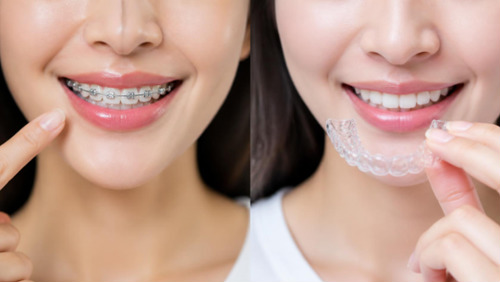
Traditional braces use metal or ceramic brackets bonded to the front of your teeth and connected by a thin archwire. Your dentist adjusts the wire over time, applying steady pressure to gradually move your teeth into better alignment. Some patients may also need small rubber bands, or elastics, to provide additional force for specific tooth or bite movements.
Because braces stay attached throughout your process, you don't need to remember to put them back in. This fixed design can provide steady control when your treatment requires more complex tooth movement
Benefits of Braces
Braces can address a wide range of alignment concerns, including significant crowding and some bite problems. Because they remain fixed to your teeth, treatment doesn't depend on remembering to wear an appliance. This can make braces a practical option when you need more complex tooth movement or prefer a fixed treatment.
Drawbacks of Braces
Braces are clearly visible and require careful cleaning around the brackets and wires. You may need to avoid hard, sticky, or chewy foods that could damage the brackets and wires. Food and plaque can collect around the brackets, and the wires may cause temporary soreness or irritation. Regular appointments are also needed to monitor progress and adjust the wires.
What Is Invisalign®?
Invisalign uses a series of custom-made aligners made of smooth, clear, BPA-free plastic. They are practically invisible and shaped to fit comfortably over your teeth. You wear each set of Invisalign clear aligners for approximately one to two weeks before replacing them with the next set in the series.
The aligners gradually move your teeth into a straighter position. You can remove them to eat, floss, and brush your teeth, so you can follow your usual daily routine with minimal disruption. Just remember to put them in again.
Benefits of Invisalign
Invisalign aligners are nearly invisible, making them a discreet option for many adults and teens. You can remove them to eat, brush, and floss, so you have fewer food restrictions and easier access to your teeth during daily care. Their removable design may also suit busy schedules, as long as you wear them as directed.
Drawbacks of Invisalign
Invisalign aligners need to be worn as directed, usually for about 20 to 22 hours a day. Because they're removable, you'll need to remember to put them back in and store them safely when you take them out. Keeping them clean helps prevent staining and bacteria buildup. Your treatment results partly depend on following your dentist's instructions.
Braces vs. Invisalign: What's the Difference?
Both treatments straighten teeth, but they differ in appearance, comfort, daily care, treatment time, and suitability. This braces vs. Invisalign comparison can help you decide which option best suits your needs.
| Factor | Traditional braces | Invisalign |
| Appearance | Visible brackets and wires | Nearly invisible clear aligners |
| Removability | Fixed to the teeth throughout treatment | Removable for eating, brushing, and flossing |
| Comfort | May cause temporary irritation or soreness, especially after adjustments | Usually comfortable, although new trays may create pressure |
| Diet | Avoid hard, sticky, and chewy foods | Few restrictions because you remove the aligners before eating |
| Daily wear | Worn continuously | Usually 20–22 hours per day |
| Treatment time | Often 18–24 months, depending on the case | Often 12–18 months, depending on the case |
| Office visits | Regular appointments for adjustments and progress checks | Periodic progress checks |
| Suitability | Can address mild to complex alignment and bite concerns | May suit many mild to moderate alignment concerns, depending on the evaluation |
| Maintenance | Clean carefully around brackets and wires | Clean the aligners and maintain regular brushing and flossing |
| Cost | Varies by case and treatment plan | Varies by case and treatment plan |
How Do the Treatment Processes Differ?
The braces and Invisalign process begins with a consultation, examination, and customized treatment plan. Braces are placed and adjusted in the office, while Invisalign uses a planned series of removable aligners that you change at home, with progress checks along the way.
What to Expect With Braces
Your treatment begins with a consultation and examination of your teeth, bite, and jaws. Your dentist creates a treatment plan, then bonds the brackets to your teeth and connects them with wires.
You'll attend regular follow-up visits where your dentist checks your progress and adjusts or replaces the wires as your teeth shift. Your provider will recommend an appointment schedule based on your treatment plan, progress, and how your teeth respond.
Finally, we remove the brackets and polish and clean your teeth. We may place a fixed or removable custom retainer to keep your teeth from shifting back to their old positions.
What to Expect With Invisalign
Your Invisalign treatment begins with a consultation and examination, which may include digital scans, X-rays, photographs, and impressions. Next, we create a fully customized digital treatment plan and order your aligners. You'll wear each series as directed, usually for about 20–22 hours a day, changing trays according to your plan. Progress checks help monitor your treatment. Afterward, a retainer helps maintain your results.
Is Invisalign Better Than Braces?
Invisalign isn't automatically better than braces. For some patients, its clear, removable design makes treatment more convenient and easier to fit into daily life. For others, especially those with more complex alignment or bite concerns, traditional braces may be more suitable.
Dr. Zadeh creates individualized treatment plans based on each patient's teeth, bite, treatment goals, and lifestyle rather than ranking one option above the other. When a case requires more complex orthodontic care, she may recommend a referral to an orthodontic specialist. A consultation can help determine whether Invisalign or braces is the better option for you.
Which One Should You Choose?
Choosing between braces and Invisalign comes down to what's most practical for your individual case. Your lifestyle, how much time you have, and how important appearance is to you all influence your choice.
Choose Braces If:
You have more teeth that need to move into a better position, complicated bite problems, or severe crowding. Traditional braces treat very complicated cases and a wide range of problems. If you don't want to worry about removing and replacing aligners daily, you may be a candidate for traditional braces.
Choose Invisalign If:
Invisalign may suit you if you want a less noticeable treatment and prefer removable trays. You'll have fewer food restrictions and easier access for brushing and flossing. You'll also need to commit to wearing the aligners as directed and caring for them properly.
Achieve a Beautiful Smile with Braces or Invisalign at Our Tarzana Dental Office
Braces and Invisalign can both improve tooth alignment, but the best option depends on your teeth, bite, goals, and daily routine. Dr. Zadeh creates individualized treatment plans and provides personalized guidance based on each patient's needs. Her experience includes Invisalign treatment for patients in Tarzana and surrounding communities.
If you're considering braces and Invisalign, contact Dr. Nargiz Zadeh's office to discuss your smile goals and learn which treatment may be right for you.
Frequently Asked Questions
Is Invisalign faster than braces?
Invisalign may be faster for some mild to moderate cases, but treatment time depends on the type and extent of tooth movement needed. Your dentist can estimate your timeline after examining your teeth and bite.
Does Invisalign hurt more than braces?
Both treatments may cause temporary discomfort. Braces can irritate the cheeks or lips, while Invisalign may create pressure when you start wearing a new set of aligners.
How do I decide between Invisalign and braces?
Consider your treatment needs, lifestyle, budget, and ability to follow instructions for removable aligners. A dental evaluation can show which option suits your case.
Does Invisalign work as well as braces for kids?
Invisalign may work for some children and teens, depending on their teeth, treatment needs, and ability to wear the aligners as directed. Braces may be more suitable for complex movement or when consistent tray wear may be difficult.
Is Invisalign suitable for severe crowding?
Invisalign may help some patients with significant crowding, but severe cases require careful assessment. Braces or a referral to an orthodontic specialist may be recommended when more complex treatment is needed.